|
BATMAN FAN ART GALLERY #15 (SEASON FOUR) |
Updated: October 30, 2026

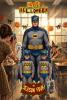




The earliest stories appearing in the Batman comic book depicted a vengeful Batman, not hesitant to kill when he saw it as a necessary sacrifice. In one of the early stories, he is depicted using a gun and metal bat to stop a group of giant assailants and again with a group of average criminals. The Joker, a psychopath who is notorious for using a special toxin called Joker venom that kills and mutilates his victims, remains one of the most prolific and notorious Batman villains created in this time period. By the end of the Jokers second appearance in the series, Batman has, since his debut in Detective Comics, killed around nineteen people and one vampire in all, with the Joker having killed only thirteen people, and Robin one. Later, during the Silver Age, this type of supervillain changed from disturbing psychological assaults to the use of amusing gimmicks.
Typically, the primary challenges that the Batman faced in this era were derived from villains who were purely evil; however, by the 1970s, the motivations of these characters, including obsessive compulsion, child abuse, and environmental fanaticism, were being explored more thoroughly. Batman himself also underwent a transformation and became a much less one dimensional character, struggling with deeply rooted internal conflicts. Although not canonical, Frank Miller The Dark Knight Returns introduced a significant evolution of the Batmans character in his eponymous series; he became uncompromising and relentless in his struggle to revitalize Gotham. The Batman often exhibited behavior that Gothams elite labeled as excessively violent, as well as antisocial tendencies. This aspect of the Batman's personality was also toned down considerably in the wake of the DC wide crossover Infinite Crisis, wherein Batman experienced a nervous breakdown and reconsidered his philosophy and approaches to his relationships.
|
 HOME
 About
 EMail Me
 TOP |
 PREVIOUS ITEM | NEXT ITEM
 ( 38 of 50 )